

7 Ways Strength Training Helps Knee Pain (and Why Women Over 30 Need to Start Now)

There’s a moment many women hit in their 30s and 40s where the body starts whispering before it starts shouting. The knees ache after sitting too long. The lower back gets stiff tying your shoes. Getting off the floor suddenly becomes a whole production with sound effects included. And somewhere along the way, women were sold the idea that endless cardio was the answer to everything.
Cardio absolutely matters. Your heart, lungs, endurance, mood, and overall health benefit from it. Keep the walks. Keep the dance classes. Keep the treadmill sessions. But if cardio is the spark… strength training is the armor.
Research on age-related muscle loss, known as sarcopenia, shows that women can gradually lose muscle mass beginning as early as their 30s — particularly during perimenopause and menopause. Studies published through the National Institutes of Health (NIH) highlight how resistance training can help slow that decline and improve overall mobility and strength. That muscle loss doesn’t just affect aesthetics. It affects your joints, balance, posture, metabolism, and bone health. And for many women dealing with knee pain? Weak hips, glutes, thighs, and core muscles are often part of the problem.

Personally, strength training changed everything for me. Strengthening my thighs, hips, and core honestly took years off these knees. The stiffness I used to feel constantly started fading. My back pain improved too. Between consistent resistance training, mobility work, cardio, and yes — my anti-inflammatory juices — my body feels stronger, more stable, and more supported than it did years ago.
So let’s talk about why the weight rack deserves more love and how strength training helps supports healthier knees, stronger bones, better balance, as well as reduces pain & stiffness for women in their 30s and 40s..
1. Strength Training Builds Muscle to Support Your Knees
Your muscles act like natural shock absorbers for your joints. Strength training targets important muscle groups like the:
Quadriceps
Hamstrings
Glutes
Calves
Core muscles
When these muscles are stronger, they help take pressure off the knees during movement.
For example, strong quadriceps help control bending and straightening movements, reducing stress on ligaments and cartilage. Strong glutes and hips improve alignment and movement patterns, which can reduce unnecessary strain on the knees.
As women age and naturally lose muscle mass, that support system weakens. Strength training helps maintain and rebuild muscle so your joints aren’t doing all the work alone.
2. It Improves Stability, Balance, and Coordination
Many knee injuries happen because of instability, poor balance, or weak supporting muscles.
Exercises like:
Lunges
Step-ups
Squats
Resistance band work
Single-leg exercises
…train your body to control movement more efficiently.
This improved coordination helps reduce the risk of:
Falls
Awkward twists
Ligament injuries
Meniscus strain
And let’s be honest: balance becomes increasingly important as we age. Strength training helps women stay steady, confident, and mobile in everyday life.
Because slipping on a random wet grocery store floor at 22 and at 42 are two very different life experiences.
3. How Strength Training Helps Reduce Knee Pain in Women Over 30
One of the most common causes of chronic knee discomfort in women over 30 is osteoarthritis and general joint wear-and-tear.
Research has shown that strength training can help reduce pain and improve knee function in people with mild to moderate osteoarthritis.
Building muscle around the knee helps “unload” stress from the joint itself, decreasing pressure on damaged cartilage and improving movement quality.
A study published in the Journal of Orthopaedic & Sports Physical Therapy found that participants who performed strength training twice weekly experienced:
* Reduced knee pain
* Improved mobility
* Better knee function after 12 weeks
And honestly? This matches what I experienced personally. Once my legs and core became stronger, everyday movement stopped feeling so stiff and draining.
4. It Helps Improve Flexibility and Range of Motion

People often think strength training automatically makes you “tight,” but when done properly, it can actually improve mobility and flexibility.
Strong muscles support healthier movement patterns, allowing the knees and hips to move more smoothly and efficiently.
Exercises like:
Controlled squats
Romanian deadlifts
Resistance band exercises
Mobility-focused strength work
…can help reduce stiffness while improving joint function.
Women over 30 often begin noticing decreases in flexibility and mobility, especially with sedentary jobs or long periods of sitting. Strength training helps counteract that decline.
Movement is medicine. The body likes to be used.
5. Stronger Hips and Core Can Protect Your Knees and Back
A lot of knee pain isn’t "just" about the knees.
Weak hips can affect alignment.
Weak glutes can change walking mechanics.
Weak core muscles can place extra strain on the lower back and knees.
The body is interconnected.
This is why so many physical therapy programs focus heavily on hip and core strengthening for knee pain sufferers.
Personally, once I started prioritizing lower-body and core strength consistently, my back discomfort improved alongside my knees. My posture improved too. I felt more stable during workouts and everyday activities.
Sometimes the solution isn’t doing less movement.
Sometimes it’s building a body better equipped to handle movement.
6. Strength Training Supports Bone Health and Healthy Weight Management
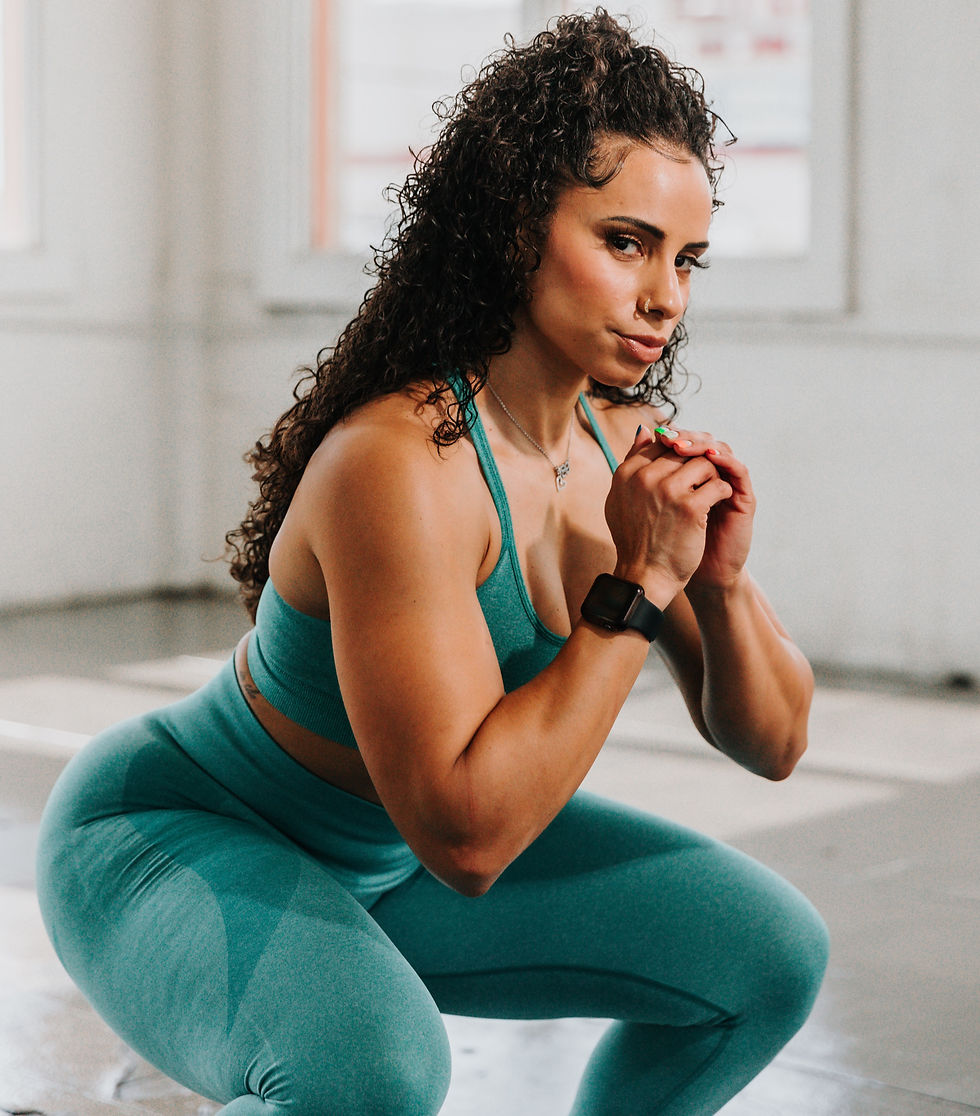
According to the National Institute of Arthritis and Musculoskeletal and Skin Diseases, resistance training helps stimulate bone-building activity, which becomes increasingly important as women age and estrogen levels begin to shift. Thus reducing the risk of osteoporosis over time.
At the same time, building muscle helps support metabolism and healthy weight management.
Why does this matter for knees?
Because excess body weight places additional stress on the knee joints during activities like:
Walking
Climbing stairs
Standing
Exercising
Strength training helps support body composition, metabolism, and joint health all at once.
And contrary to internet myths, lifting weights does not* magically turn women into bodybuilders overnight.
Most women simply become:
Stronger
More toned
More stable
More energetic
More resilient
Which honestly sounds like a win to me.
7. It Helps You Stay Active, Independent, and Confident
Knee pain can create a frustrating cycle:
Pain leads to less movement.
Less movement leads to weakness.
Weakness leads to more pain.
Strength training helps break that cycle.
As your body becomes stronger and movement becomes easier, confidence grows too. You start feeling capable again — whether that means:
Dancing
Hiking
Traveling
Chasing kids or grandkids
Taking fitness classes
Simply getting through the day with less discomfort
Strength training isn’t just about aesthetics.
It’s about preserving your quality of life. It’s about aging with strength instead of fear.
And there’s something incredibly powerful about realizing your body isn’t fragile — it’s adaptable.
Final Thoughts

You do not need to spend hours in the gym to benefit from strength training.
Simple exercises like:
Squats
Lunges
Step-ups
Dumbbell exercises
Resistance band training
Bodyweight movements
…can all make a huge difference over time.
Start slowly. Focus on proper form. Stay consistent.
And if you’re dealing with significant knee pain or health concerns, talk with a healthcare professional or physical therapist before starting a new program.
Cardio absolutely deserves its flowers. Keep dancing. Keep walking. Keep moving. But don’t sleep on the weight rack.
Because strong muscles don’t just change how your body looks.
They change how your body supports you.
Nourish. Move. Glow.

Sources & Research
National Institute of Arthritis and Musculoskeletal and Skin Diseases (NIAMS)
Harvard Health Publishing
Journal of Orthopaedic & Sports Physical Therapy
National Institutes of Health (NIH)
University Hospitals Health System
Research on sarcopenia and women’s muscle loss during aging and menopause
Disclaimer:
The tips and information shared in this blog are for educational and informational purposes only and should not be considered medical advice. Always consult with a qualified healthcare professional before making decisions regarding your physical or mental health, including starting any new exercise or nutrition program, especially if you have underlying medical conditions, injuries, or mental health concerns.


Comments